Blog


Dear Patients of Florida Smile Studio
I am writing to reassure you as we are closely monitoring the development of the Coronavirus (COVID-19) that our office is open to serve your dental needs. In this time of health crisis, it is important to maintain some semblance of normalcy.
Be assured that we are following the precautionary steps as recommended by CDC, as well as local and state health departments above and beyond our already stringent sterilization and cleanliness requirements and taking every necessary precaution to protect our staff and patients.
We thank you for your trust in our dental office and looking forward to seeing you at your appointment.
Should you have any questions or need assistance please ask any of our team members.
Thank you!
Stay healthy and Smile!
Warm regards,
Dr Burak Taskonak and Florida Smile Studio Team
Traditional braces are sometimes the best option for orthodontic treatment, especially if your teeth are severely out of alignment. However, sometimes after treatment with traditional braces, the teeth can shift, creating a need for additional correction. to manage this type of treatment.
After you’ve had braces, you need to wear a retainer to keep your teeth from moving out of position. Your orthodontist will give you instructions on when and how often to wear your retainer. If you follow these instructions diligently, you’ll keep your new, properly aligned smile for a long time.
However, some people have a hard time making sure they wear their retainer regularly, especially younger patients who have had braces. Without the retainer, the teeth can shift and move, creating new issues with alignment. Fortunately, these problems are nearly always much less severe than those originally treated with braces.
For these cases, Invisalign is an excellent option. Without the discomfort and unattractiveness of traditional braces, you can still have treatment to move your teeth back into the correct position. Invisalign is ideal for correcting these minor gaps and slight misalignments that can develop after traditional orthodontic treatment. It might also be applicable if you have undergone a full course of traditional orthodontic treatment and still have slight gaps or minor misalignment.
Your orthodontist is the best source for information on caring for your teeth after you’ve had braces. In addition to brushing, flossing, and regular dental appointments, you’ll need to wear your retainer, usually at night, on a regular or semi-regular basis to keep your teeth positioned properly.
Even if you wear your retainer exactly as instructed, there is still a slight chance that your teeth might shift out of alignment. If this occurs, go back to your orthodontist for an evaluation to determine the best course of action.
If you are interested in seeking Invisalign treatment and would like more information, contact us today to schedule a consultation.
Brushing twice a day, flossing, and visiting your dentist for exams each year is essential for your oral health. Unfortunately, you still may require involved dental treatments even after following your dentist’s recommendations for healthy teeth and gums. Considering millions of people undergo a root canal treatment, learning when this common procedure is necessary is smart.
A chipped, broken tooth not only affects the appeal of your smile, but it can also cause damage to your underlying nerves. If the tooth is hit with severe trauma, it can also sever the nerve completely. This kills the nerve, decreasing your chances of successful tooth repair.
A root canal may be able to repair the damage to the nerve, reconnecting it to the existing tooth. After saving the damaged nerve, your dentist can bond the surface enamel to restore the broken tooth.
An abscess develops when an infection develops in the tooth pulp and spreads to its roots. An abscessed tooth is painful, but very serious. If this infection is left untreated, it may spread to the bone, resulting in serious complications.
Antibiotics will be necessary to treat the infection, but your dentist will also perform a root canal treatment to remove bacteria and dead tissue from the tooth pulp and roots.
Cavities are also common reasons to undergo a root canal. Since cavities form over time, they can cause bacteria to spread deep into the tooth pulp, decaying the tooth and infecting the pulp and roots. If you have a deep cavity, you may experience tooth sensitivity, pain in and around the mouth, head, and jaw, and tender, bleeding gums.
The best option for repairing deep cavities is to remove the decay by cleaning out the root canals. In many cases, removal of the damaged nerve will also be necessary.
A root canal treatment may be common, but it deserves serious thought and consideration. Contact our caring team at Florida Smile Studio to learn if this procedure will benefit you and your dental health.
When looking into a mirror, what do you see? Do you focus on improvements that might be attained by improving your smile? Have you ever given thought to what could be achieved simply by a visit to your dentist?
Our cosmetic dentist has tools available to help you reach goals you might have thought were too expensive, too difficult or just “not for you”. Have you ever asked your dentist or hygienist what you might be able to do to improve your smile?
Are your teeth not white or bright enough? In-office or at-home teeth whitening is available. Don’t want to deal with it on your own? No problem. In-office teeth whitening can be completed in a few short hours. You just sit back, relax and enjoy your new, brighter smile
If you’ve been told whitening will not bring you the desired results, then perhaps porcelain veneers is the answer you’ve been waiting for. Porcelain veneers are made up of a thin material that is fitted over your prepared, natural tooth. The cosmetic dentist works much like an artist in that impressions are taken of the teeth that will receive the veneers, the shade of your teeth is matched to give you a natural appearance, and your dentist will place the veneers on your own teeth. The result is a brand new smile that looks so natural, no one will know you have veneers.
As we get older, our teeth can give away our age. Medications, wear and tear, lifestyle and diet are just a few of life’s roadblocks that contribute to our teeth’s appearance. That is why a visit with your dentist can offer many options to improve your appearance.
These processes are just two of the possibilities you have available to make those subtle changes that can make major improvements to your overall appearance. So if you have a few hours, that’s all it may take to make those life altering changes you’ve wanted to do for so long. Contact our cosmetic dentistry team at Florida Smile Studio for answers to the questions you have on how to improve that smile for many years to come!
If you are considering dental implants, one of the most important decisions you can make is which dental implant dentist to use. There are several things to keep in mind as you look for just the right person to help you regain your missing teeth. The right dentist can help ensure a successful procedure and long-term satisfaction with your implants.
Your quest for dental implants should begin with a consultation with a dental implant dentist. You might even consult with more than one to be sure you’re comfortable with the recommended procedure as well as the dentist himself. As you speak to your dentist, there are several things to keep in mind.
If you feel comfortable with the dentist, know people who have been happy with his past work, and feel you have gotten satisfactory answers to all of your questions, chances are that you will work well with this dentist.
If you are considering tooth replacement, dental implants are one of your best choices. They will last for many years and do not have to be refitted periodically like dentures. They also remain in your mouth permanently and do not shift or fall out at inconvenient times. The root of the implant is embedded directly in the jawbone, and so stimulates bone growth whenever you chew. This will keep your jaw healthy and prevent your face from changing shape over time, as can happen with long-term denture wearers.
During your consultation, you’ll also determine if you have any concerns or any health conditions that might interfere with your ability to successfully recover from an implant procedure. Be sure to ask any questions you might have, and in the end you are likely to be very pleased with your new teeth.
Contact us at Florida Smile Studio to schedule a dental implant consultation today.
A dental bridge is often used to replace one or two teeth that have teeth remaining on either side. The bridge is anchored to the adjacent teeth with crowns or wires. Dental implants can also be used to replace only one or two missing teeth without requiring reshaping of the adjacent teeth. When several teeth are missing, All-on-4 implants can also be a good permanent solution.
The bridge is a way to place a permanent denture that replaces only one or two teeth. In a crown and bridge, the denture is anchored on either side by a crown that is placed on the adjacent teeth. These adjacent teeth must be reshaped to make room for the crown. This type of tooth replacement is permanent, and remains stationary in the mouth, but it does nothing to help prevent jawbone atrophy over time.
By contrast, dental implants do not require any other teeth to be altered. They are placed directly in the jawbone, where the bone bonds to the implant. In the long term, this bond not only holds the tooth securely in place, but also keeps the jawbone regenerating to prevent long-term bone loss. If you have already experienced some bone loss, which can reduce the likelihood of a successful implant procedure, All-on-4 implants might still be an option.
Traditional dental implants replace each individual tooth with a single implant. This requires a strong foundation of bone in the jaw. Without sufficient bone mass, your periodontist might recommend bone grafts. If you have thicker, stronger bone in certain areas of the jaw, such as in the back, an All-on-4 procedure takes advantage of this. The implants are angled to take advantage of the thicker bone. An entire arc of teeth, in the form of a removable denture, can be supported by only four implants. Our periodontist can determine if an All-on-4 procedure might be a good replacement for your current bridge.
Call us today at 954-905-2000 to discuss your implant options with Dr. Taskonak.
Implant dentistry allows those with missing teeth to replace them with natural-looking and -feeling teeth that don’t shift or move in the mouth. The initial recovery after implants are placed is vital to the long-term success of the implants, so be sure to take care of yourself and follow our dentist’s instructions after your surgery.
Like any surgery, dental implant surgery requires a few days of recovery time. Our implant dentist will give you details instructions on how to take care of your mouth right after surgery. This can include:
Don’t try to rush back to work right after you’ve had your dental implants placed. It’s important to rest and heal according to your dentist’s instructions so your implants have the best possible odds for long-term success.
The full healing process for dental implants takes several weeks. During this time, the bone of the jaw grows around and bonds to the material of the implant, creating a strong bond that will keep your implants stationary. It will also help the implants stimulate growth in your jawbone.
Once the implants have healed and your new prosthetic teeth have been added, be sure to continue to take good care of your teeth and gums. Brush your new teeth to prevent buildup of bacteria and plaque, and be sure to also clean any remaining natural teeth. You should also floss around the abutments of your implants. You might need to visit the dentist a bit more frequently to ensure your gums are healthy. Gum disease can lead to failure in dental implants, so it’s very important to maintain good oral hygiene and follow your dentist’s guidelines in caring for your new implants.
To schedule a consultation to discuss whether dental implants are right for you, call our team today!
The term root canal actually refers to an area inside the tooth that houses the tooth pulp and the nerve that serves the tooth. When a tooth becomes seriously infected or severely decayed, clearing out this area of the tooth can be the best way to preserve it. Without the option of this root canal procedure, the tooth might have to be extracted.
A root canal is used to preserve a tooth that has been severely damaged by infection, decay, or trauma. The procedure removes the infected or decayed tissue, preventing further damage to adjacent teeth, or wider-spread infection. Usually when a dentist recommends a root canal, it is because the only other option is removal of the tooth.
Using a root canal to preserve a tooth helps keep your teeth in proper alignment. If the tooth is simply removed, you run the risk of having teeth shift and move into the empty space, disrupting your bite and possibly leading to uncomfortable side effects such as teeth grinding or temporomandibular joint disorder (TMD).
Although the root canal dental procedure has a bad reputation, it is no more difficult or uncomfortable than a filling or a crown. Our dentist makes a small hole in the tooth, through which special tools are inserted and used to remove the infected tissue. After the infection and/or decay has been removed, the interior of the tooth is then thoroughly cleansed and filled. After this process, the dentist prepares the tooth for a crown.
After a root canal, there is no feeling left in the tooth, because the nerve has been removed. However, the tooth remains functional so that you can chew normally. With the original tooth left in place, your remaining teeth remain in proper alignment, preventing misalignment that can occur due to tooth loss.
If you feel you might be in need of a root canal to help preserve a damaged tooth, please contact our dentist in Fort Lauderdale to schedule an appointment or a consultation.
Louis Armstrong once sang ‘Smile and the whole world smiles with you’, and never a truer word was spoken. Smiling is a great reliever of stress, and a hugely important factor in our attractiveness to others. It’s a proven fact that smiling not only makes us feel better about ourselves, but also those around us and keeping our smiles healthy is one reason why so many people are encouraged by dentists to make the effort to visit regularly.
But a healthy mouth is not just intrinsic to the way we look, it can also have a positive effect on our overall state of health. While keeping our teeth clean with regular brushing and flossing, and visits to our practice helps to ensure our smiles remain bright and attractive, good oral hygiene reduces the risk of developing serious illness in other areas.
This is especially true of the heart. The most vital of organs can be badly affected by chronic gum disease, as plaque build-up – a major factor in gum disease – can stretch underneath gum tissue and allow bacteria to enter the blood stream where it binds with fat proteins. These proteins can build up, leading to clogged arteries which can obstruct the flow of blood around the body and could eventually trigger a heart attack or stroke.
Poor oral hygiene and health has been attributed to infections in other parts of the body too. Research surrounding links between infection and oral health has revealed connections between gum disease and rheumatoid arthritis and also memory loss in later years.
Diabetics too can be affected by poor oral health, as the condition often leaves the sufferer with a less efficient auto-immune system, making them more susceptible to infection and so gum disease is often more prevalent in diabetes sufferers.
There are other areas where poor oral health can have an effect on a person’s overall health, including pregnancy, so it is important that regular dentist visits are made to address any problems, and also maintaining a strict dental hygiene regime involving brushing with a good toothpaste, flossing regularly and rinsing with mouthwash. Dietary changes can also help effect good dental health.
With good oral health intrinsically linked to good physical health, it has never been more important to visit a dentist – not only to safeguard your smile, but also to safeguard your overall health. Contact our caring dental team at the office of Dr. Taskonak to schedule your next visit.
General dentistry is more than just cleaning your teeth and checking for cavities. Our dentist also performs a screening for any signs of oral cancer. The earlier this type of cancer is detected, the better, and our dentist is in the best position to find any signs that you might miss.
When a dentist evaluates your oral health during your regular appointment, he will examine your tongue, gums and cheeks for any signs there might be something wrong. Some signs both you and your dentist can keep an eye out for include:
If you notice any of these problems, be sure to bring them to Dr. Taskonak’s attention. Also be sure to visit the dentist regularly. During your dental appointments, our dentist can get a good look at your mouth and will examine your oral tissues closely. It is easier for your dentist to find symptoms of oral cancer earlier than you might be able to, because of the dentist’s different perspective and expertise. As with any form of cancer, early detection increases the odds of successful treatment.
Taking care of yourself helps prevent cancer of all kinds, including oral cancer. Maintain your oral health by brushing and flossing regularly and visiting your dentist. Smoking or use of smokeless tobacco products, like chewing tobacco, greatly increases your likelihood of developing oral cancer. Excessive alcohol use can also increase your risk. Other risk factors include:
Some cases of oral cancer, however, occur in the absence of any of these risk factors. It is important, then, to keep a close eye on your oral health, see us for regular appointments, including a cancer screening, and report any unusual symptoms to our dentist for evaluation.
Contact our office if you notice any symptoms or schedule a checkup with us today!
If you are considering dental implants, one of the most important decisions you can make is which dental implant dentist to use. There are several things to keep in mind as you look for just the right person to help you regain your missing teeth. The right dentist can help ensure a successful procedure and long-term satisfaction with your implants.
Your quest for dental implants should begin with a consultation with a dental implant dentist. You might even consult with more than one to be sure you’re comfortable with the recommended procedure as well as the dentist himself. As you speak to your dentist, there are several things to keep in mind.
If you feel comfortable with the dentist, know people who have been happy with his past work, and feel you have gotten satisfactory answers to all of your questions, chances are that you will work well with this dentist.
If you are considering tooth replacement, dental implants are one of your best choices. They will last for many years and do not have to be refitted periodically like dentures. They also remain in your mouth permanently and do not shift or fall out at inconvenient times. The root of the implant is embedded directly in the jawbone, and so stimulates bone growth whenever you chew. This will keep your jaw healthy and prevent your face from changing shape over time, as can happen with long-term denture wearers.
During your consultation, you’ll also determine if you have any concerns or any health conditions that might interfere with your ability to successfully recover from an implant procedure. Be sure to ask any questions you might have, and in the end you are likely to be very pleased with your new teeth.
Consider our trained professionals to be your implant dentistry team. Contact the office of Dr. Burak Taskonak to schedule a dental implant consultation today.
If you’ve had gum disease and required treatment for your gums, you’ll want to be sure to take good care of your oral health afterwards. This will not only help you heal effectively, but will help prevent you from redeveloping the problems that caused your gum disease in the first place.
There are various types of gum treatments, and depending upon which treatment you received, your healing time can be shorter or longer. Our periodontist will provide instructions for how to take care of your mouth right after your treatment. These instructions could include:
If you’ve had gum surgery, you’ll need to take very careful care of your mouth until your stitches are removed, then gradually ease back into your normal everyday routine. For less invasive procedures, you’ll require less recovery time, but still might be sore or uncomfortable for a short time. Over-the-counter pain relievers are often sufficient for procedures like deep cleaning or planing and scaling.
In the long term, you’ll want to continue to take good care of your gums so you won’t develop gum disease again. Regular flossing and brushing are the best ways to keep your gums healthy. Be sure to use a brush that isn’t too stiff, and be sure you’re using the proper flossing technique to ensure the best results. If you’re not sure what proper flossing technique is, ask your dentist for a demonstration.
If you have recurring problems with gingivitis or other gum issues, an electronic toothbrush or a water-style tooth cleaner can help. Talk to our dentist about recommendations for the best approach to your oral hygiene. Keeping your gums healthy is an important way to avoid tooth loss, serious gum disease, and even cardiovascular disease.
If you’ve recently had gum surgery and want more information for the best aftercare instructions, call our office to speak with our dental professionals.
‘Teeth in a day’ refers to the implant procedure that deals with placing immediate loading dental implants. In immediate loading implants, the crown is placed immediately after placing the implant. You can start chewing normally within a few hours.
With traditional dental implants you must allow the implant to undergo a process called osseointegration which allows the implant to fuse to the surrounding bone. This process normally takes around three to six months to complete. Patients receive a crown only after the implant has completely fused to the bone.
Today the dentist can get an accurate picture of the level and thickness of the bone in your mouth by ordering a 3-D CT scan. Using these scanned images the dental lab will produce a surgical template to guide your dentist while conducting surgery.
With 3D imaging and other technology, the crown can be fabricated beforehand and placed along with the implant. If the surrounding bone and mucosa is healthy, the chances of failure with immediate loading implants are very low.
Immediate loading implants can be placed immediately after extracting a decayed tooth. The socket of the tooth is widened slightly to allow placement of the implant. But they cannot be placed if the tooth was severely abscessed or the gums were unhealthy. These implants are not advised for people with uncontrolled diabetes or other systemic conditions.
Check with our implant dentist in Fort Lauderdale and call us today to determine if you are a candidate for this type of implant procedure.
Endodontics is a branch of dentistry that specializes in treating problems with the tooth’s interior, or tooth pulp. When problems develop with this part of the tooth, a root canal procedure is often necessary. This procedure is usually performed by our endodontist.
Your teeth are made of several parts. The exterior portion is the tooth enamel, which is the hardest substance in the human body. Beneath the enamel lies the dentin. The dentin is filled with microscopic pores that transmit sensation from the tooth surface to the tooth’s interior. This interior is called the root canal.
Each individual tooth has a root canal. Root canals vary in size depending upon the size of the tooth. This cavity holds a mixture of nerve tissue, connective tissue, and tissue that supplies circulation to the tooth. The pulp’s main purposes are to transmit sensation such as heat, cold, and pressure, and to regenerate dentin.
Root canals can become damaged or infected due to various problems such as:
Once bacteria and infection enter the root canal, they can spread through the root into surrounding bone and other tissues. Infection can affect adjoining teeth, the jawbone, facial bones, the sinuses, and even the brain if spread is left unchecked. Because infection can spread into such vital areas, it’s important to have any infection treated in early stages.
To prevent these serious side effects, our specialist might recommend a root canal procedure. This procedure removes all the pulp tissue as well as the infection. The tooth interior is sterilized and refilled with a special resin, then the tooth itself is fitted with a crown. The tooth continues to be usable, although it no longer experiences any sensation since the nerve has been removed. When a tooth becomes this seriously damaged and infected, this procedure is often the best—and sometimes only—way to preserve it.
If you’re having tooth pain, contact our office today to schedule an appointment!
A great smile does wonders to enhance a personality, increase confidence and the way others perceive you. Ever wondered what exactly makes up a ‘perfect’ smile? An ideal smile is not just white teeth, but it is essentially harmony or ‘balance’ of the teeth and gums displayed, with an individual’s face. The size, shape and hue of teeth, the shape of the gum line framing teeth, the degree of lip parting all add up to make a smile ‘just right’.
Aesthetic dentistry is aimed at producing dental work that enhances an individual’s appearance, and includes various procedures aimed at modifying dental appearance, especially that of highly visible front teeth. While these include cosmetic teeth reshaping, and veneering to alter the shape and look of teeth, just altering the teeth may not always suffice to change a smile, in some cases the gum line requires alteration as well. The cosmetic procedure of gum or gingival contouring involves selectively reshaping the gums to produce a more pleasing appearance.
‘Gummy smiles’ or excessive gum display, small appearing teeth, uneven looking teeth are common issues which though not always, but at many times, can be attributed to excess gum tissue or an imbalanced gum-line, which are amenable to the relatively non-invasive procedure of cosmetic gum contouring.
Cosmetic gum contouring can be planned as a part of an overall ‘smile designing’ treatment, where the shape of teeth are changed by veneers or orthodontics, and gingival reshaping is done as well. Orthodontic braces produce changes in position of teeth and predispose to gum inflammation as they make brushing difficult, and are often associated with some gum overgrowth. Thus, when the braces are removed, even though teeth may be aligned, their appearance may be short due to some areas of overgrown gum tissue. This usually requires cosmetic gum contouring to refine the aesthetics.
Prior to planning gum contouring, the dental team usually performs a smile analysis. Gum contouring, technically known as gingivectomy or gingivoplasty can be done in a single sitting under local anesthesia. Being minimally invasive it usually doesn’t require stitches and produces no or mild post-operative discomfort.
Contact our office today to find out what cosmetic treatment plans will work for you!
[vc_row][vc_column][vc_column_text]
Flossing is not only possible with braces, it’s very important to ensure your teeth remain clean and healthy during your dental treatment. Dentistry provides a challenge to everyday oral hygiene, but it’s very possible to maintain the health of your teeth even while you’re wearing braces.
When you’re wearing braces, it’s very important to maintain your oral health. Because parts of your teeth are covered and other parts are hard to reach, you’ll have to be extra diligent in your everyday care. One important element of your dental care regimen that you don’t want to skimp on is flossing.
Flossing can be challenging while you’re wearing braces, but special flossing tools can help you perform this vital task. Talk to our dentist about special types of floss and floss threaders that make it easier to reach between the teeth under your braces. Braces can collect extra food particles that can increase your likelihood of developing tooth decay, so flossing is an important way to keep these bits of food out from under your braces and between your teeth.
Braces mean you’ll need to be extra vigilant and extra dedicated when you clean your teeth. Carry a travel toothbrush with you so you can brush after every meal even when you’re away from home. You can also rinse your mouth and use mouthwash to keep your teeth clean and reduce the risk of tooth decay. Talk to our dentist about special tools to help overcome the challenge of oral hygiene while you’re wearing braces.
Without diligent care, you are much more likely to develop cavities because of all the additional surface area where bacteria can grow. You might also develop white spots on your teeth that are visible when your braces are removed, a side effect of plaque that develops under and around your braces. Taking good care of your teeth, flossing and brushing regularly, and following the instructions of your dentist can help ensure your teeth remain healthy while you’re wearing your braces.
For more information and tips on your dental oral health, talk to our caring and knowledgeable team by calling our office today.
[/vc_column_text][/vc_column][/vc_row]
[vc_row][vc_column][vc_column_text]
Periodontics is a branch of dentistry that focuses on the health of the gums. Healthy gums are vital to maintaining healthy teeth. In fact, severe gum disease is one of the main causes of tooth loss. If you do develop gum disease, there are several types of treatment. One of these is planing and scaling.
Gum disease is a common problem, and can begin with mild symptoms you might not notice right away. Our dentist, though, can detect signs you might not see. When gum disease is diagnosed early, it can be treated more easily. Symptoms you should keep an eye out for include:
During your regular dentist appointments, our dentist will also evaluate the pockets around your teeth. If they are too deep, this is an indication that gum disease might be more advanced. Based on the severity of your symptoms, our dentist will recommend a course of treatment.
Early stages of gum disease, called gingivitis, are simply an inflammation of the gingival tissue. Brushing with a baking soda toothpaste or a similar toothpaste designed to reduce gingivitis symptoms might be the only necessary treatment. As the infection progresses, more extensive treatment might be required. One common treatment for gum disease is scaling and planing.
Scaling and planing is a deep cleaning technique in which the dentist thoroughly cleans tartar and plaque from the teeth below the gumline. In addition, the upper parts of the tooth roots are planed to make them smoother. The smoother surfaces are less likely to collect additional plaque and tartar. The procedure is usually performed under a local anesthetic, sometimes accompanied with sedation. The gums are then allowed to heal. Without the excess tartar, they can return to a normal, healthy condition. If you continue to take good care of them after your treatment, they will remain healthy.
Call us at East Broward Dental to schedule your appointment or consultation with Dr. Taskonak.
[/vc_column_text][/vc_column][/vc_row]
Many of the wonderful dental improvements available today are due to porcelain or composite resin restorations. One of the primary considerations before entering into cosmetic dentistry is how your surrounding untreated teeth will look upon completion of your dental enhancement. A consultation with our cosmetic dentist is important to address a course of action to provide you with the best result.
If teeth are dull or have yellowed from smoking, age or dietary habits like coffee, tea, soda or wine consumption, a good first step is a visit with the dental hygienist. A professional cleaning will usually remove topical stains and provide the best base to aid in determining teeth’s true shades.
It is important to note that ceramic and composite resins are not affected by any whitening process. Keeping that in mind, if you are dissatisfied with the result of a standard cleaning, you should consider whitening your teeth before embarking on cosmetic dentistry improvements such as dental bonding, veneers, implants or crowns.
If teeth whitening is to be pursued, to obtain the closest match possible it is advised to complete teeth whitening through either in-office whitening or take-home kits available through our dental provider.
In-office whitening will generally offer the fastest and optimum result. While take-home kits allow you to whiten at your own pace in the privacy of your home, it might take weeks to achieve the maximum benefit. Once the whitening process has been completed, you can move ahead to select a color shade for the anticipated cosmetic enhancement.
Following the instructions received from our cosmetic dentist will keep your new smile brilliant. These instructions will likely include a professional cleaning twice per year along with a dental exam to make sure your cosmetic improvements, as well as the rest of your teeth, are as healthy as possible.
Over time whitening touch-up may be needed to maintain the color of your natural teeth. Touch-up kits are available through your dental provider or in-office whitening may be considered to maintain consistent teeth coloring.
Daily flossing and brushing with the recommended tooth paste or gel at least twice per day will also help to keep your new smile shining bright for many years.
To learn more about the benefits of teeth whitening, call our office serving Fort Lauderdale, FL today to schedule a consultation with Dr. Taskonak.
When you decide on cosmetic dentistry, it’s important to work with a cosmetic dentist who’ll provide the results you want. Taking some time to get referrals and schedule consultations can help you ensure you’re comfortable with your dentist and will end up with cosmetic work you’re happy with.
It’s easy enough to type “cosmetic dentist” into your search engine of choice and take a look at all the dentists in your area. But you shouldn’t stop there. You want to make the best choice for you, so take some time to narrow your list. There are a few effective ways to do this, including:
Whether you’re having your teeth whitened, your gums contoured, or are getting veneers, it’s important to find a cosmetic dentist with experience in that procedure. If you’ve gotten a referral and you’re happy with the work you see in a dentist’s before and after gallery, it’s time to move on to scheduling a consultation.
It’s easy to forget even basic questions in the middle of a conversation, so before you go to your consultation, make a list of all the questions you’d like to ask. You’ll want to be sure to tell our dentist exactly what you’d like to have changed about your smile and what you’d like it to look like when you’re done. If you plan to have more than one cosmetic dentistry procedure, find out if you can have two or three done at the same time.
The dentist will make recommendations regarding what procedures will achieve your goals. The more you know about what to expect after treatment, the more likely you are to be happy about your final results.
Get started on your new smile by choosing our practice and calling the office of Dr. Burak Tashkonak today.
Dentures used to be the only solution for lost teeth for many decades before dental implants became popular. As the population in many western countries are aging the need for dentures and implants are increasing every year. Conventional dentures require considerable practice to be able to chew and speak with ease. The breaking-in period for new dentures can vary from patient to patient and some people end up hating their dentures even though the dentures have been made properly. Partial dentures also have problems with stability and can move when chewing sticky or hard food. Studies have shown that a vast majority of people prefer removing their dentures while chewing in a non-social setting.
To remedy this problem, dental implants have been used to stabilize the dentures and prevent them from becoming loose. A loose lower denture can move as much as half an inch both sideways and up/down during eating and speaking. Implants anchor the dentures and provide the stability needed and these dentures are called Implant supported Overdentures. This translates to improved comfort while chewing and greater confidence when speaking. You need not fear your denture falling of while sneezing or while laughing.
Along with stability, implants also help preserve the natural bone surrounding the implants. In conventional dentures the forces are directed onto the alveolar ridge and this can lead to loss of bone. Implant Supported Overdentures can be placed in both the upper and lower jaw. Alternatively you can place a fixed dental bridge over the implants. Your Houston implant dentist will help you choose the right tooth replacement option for you. Most patients feel little or no pain or discomfort when the implants are being placed.
There are two types of Implant Supported overdentures: bar-retained and ball-retained.
Bar-retained dentures: Two to five implants are placed in your jawbone. A narrow metal bar runs along the top of the implants following the curve of your jaw. Special attachments help secure the denture on top of the bar. These implants are usually placed when the patient has narrow ridges.
Ball-retained dentures (Ball and socket implant): At least two implants are needed. This is simplest method of stabilizing dentures and is better suited for the lower jaw than upper. Each implant has a metal attachment (ball-type) that fits accurately into another attachment on the underside of the dentures (O-ring) or vice versa.
To discuss your own personal treatment plan, call our caring team to set up a consultation today!
[vc_row][vc_column][vc_column_text]
The term root canal actually refers to an area inside the tooth that houses the tooth pulp and the nerve that serves the tooth. When a tooth becomes seriously infected or severely decayed, clearing out this area of the tooth can be the best way to preserve it. Without the option of this root canal procedure, the tooth might have to be extracted.
A root canal is used to preserve a tooth that has been severely damaged by infection, decay, or trauma. The procedure removes the infected or decayed tissue, preventing further damage to adjacent teeth, or wider-spread infection. Usually when a dentist recommends a root canal, it is because the only other option is removal of the tooth.
Using a root canal to preserve a tooth helps keep your teeth in proper alignment. If the tooth is simply removed, you run the risk of having teeth shift and move into the empty space, disrupting your bite and possibly leading to uncomfortable side effects such as teeth grinding or temporomandibular joint disorder (TMD).
Although the root canal dental procedure has a bad reputation, it is no more difficult or uncomfortable than a filling or a crown. The dentist makes a small hole in the tooth, through which special tools are inserted and used to remove the infected tissue. After the infection and/or decay has been removed, the interior of the tooth is then thoroughly cleansed and filled. After this process, the dentist prepares the tooth for a crown.
After a root canal, there is no feeling left in the tooth, because the nerve has been removed. However, the tooth remains functional so that you can chew normally. With the original tooth left in place, your remaining teeth remain in proper alignment, preventing misalignment that can occur due to tooth loss.
If you feel you might be in need of a root canal to help preserve a damaged tooth, please contact the office of Dr. Burak Taskonak to schedule an appointment or a consultation.[/vc_column_text][/vc_column][/vc_row]
Dentures are a common form of tooth replacement, both on their own and in combination with dental implants, as in implant supported dentures. If you have missing teeth, you probably have questions about dentures, how they work, and what the best replacement solution is for you.
How long do dentures last? If cared for properly, dentures can last for many years. As the shape of your mouth changes over time, you might need to have them relined or even remade so thy fit the new contours of your mouth and jawbone.
How do I take care of my dentures? Dentures should be kept moist when they are not in your mouth so the lining—the portion that sits directly on your gums—does not dehydrate. They should also be brushed or cleaned regularly to keep bacteria and plaque from building up on them, which can cause gum disease.
What are my options for dentures? Traditional dentures rest directly on the gums. Another option is implant supported dentures. This treatment used dental implants to hold a denture in place. The denture can be removed for cleaning, but remains stationary when it is in your mouth.
Is it difficult to get used to dentures? Today’s dentures are easier to wear than in years past. They are made to fit as comfortably as possible and to take up as little room as possible in your mouth. Still, it will probably take a few days to get used to them. Until you adjust, they might feel bulky in your mouth and cause excess production of saliva. With some practice, you should be able to eat and talk normally.
What is the advantage to implant supported dentures? Traditional dentures can shift in the mouth and can make it difficult to eat certain types of foods. Implant supported dentures are held stationary by the anchoring implants. In addition, the implants help encourage the bone in your jaw to regenerate. Long-term wearers of traditional dentures often experience bone loss over time, which can lead to changes in the shape of your face. Implant supported dentures can slow or prevent this process.
Call the office of Dr. Taskonak to schedule a time to speak with our professional about your denture options.
Dentures, or some form of them, are the oldest approach to tooth replacement. People have been creating replacement teeth for centuries, with each generation coming up with new and better ways to make them more realistic and more comfortable. Today’s dentures are very different from those available even just a few decades ago. If you are considering dentures, here are some questions you might be asking.
Are dentures uncomfortable? A denture should never be uncomfortable if it is properly fitted. Ideally, a denture should fit so well that you don’t even need to use an adhesive to hold it in place. Over time, though, your jawbone and gums change shape and contour, making the denture not fit as well. If your denture is moving, causing sores in your mouth, or is in any way uncomfortable, you should talk to our dentist.
How long does it take to get used to a denture? Most people who have dentures take a few days to get used to them the first time they’re worn. They can feel strange, since they are bulky, although newer dentures are designed to take up less room in your mouth. You might have to practice talking and eating with them. Many denture wearers recommend taking a few days to practice these important skills on your own at home until you feel comfortable.
Will I be able to eat all my favorite foods? Some foods become more difficult to eat when you have dentures. Fruits like apples and vegetables like corn on the cob can be hard to bite into without dislodging a denture. Small foods like rice and pasta can also be challenging. Given time, you’ll figure out how to manage more difficult foods as well as what’s easy to eat and what you might prefer to avoid.
In general, your dentures should be comfortable, easy to wear, and should help you feel more confident about your appearance. If you have any problems or questions about your new dentures, be sure to talk to our dentist.
For more information about denture care or how to start the process of getting dentures, call our office at 954-227-8133 to set up a consultation with our specialist.
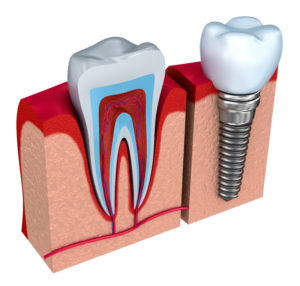
Dental implants are posts that are inserted into the jawbone and covered with a cap, or artificial tooth, in order to replace a lost tooth. Dental implants fuse with the jaw and the cap is color-matched to surrounding teeth, creating a permanent replacement tooth that looks and acts like your other natural teeth.
Dental implants are used by an implant dentist to replace teeth lost for a number of reasons, including physical damage from cracking. More than one implant can be placed in the mouth; in fact, the placement of dental implants can prevent the loss of further teeth because they stimulate the jaw and prevent the bone from weakening.
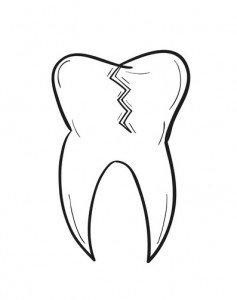
There are several levels of severity of cracks in a tooth. Most cracks are craze lines, which are small lines on the enamel of the teeth that do not require any treatment. Cracks in the cusp, or chewing surface, of the teeth that do not affect the pulp can also be treated by means other than in implant.
More serious cracks run vertically from the enamel down into the pulp, or nerve center, of the tooth. If left untreated, the pulp may become exposed, causing pain, inflammation, infection, and possibly the eventual loss of a tooth. These forms of cracks can sometimes be treated with a root canal, which involves removing the pulp and sealing the tooth.
A split tooth is the most severe form of crack, and it cannot be saved. The tooth will be removed and can be replaced with a dental implant. The implant will function like a normal tooth, and will not require any additional care after it heals.
Routine oral care, such as twice-daily brushing and daily flossing, will help the implant last for years.
A split tooth is typically the only form of a crack where you will likely need to replace it with an implant. In other, less serious cases of cracked teeth, there are often other options available.
If you have a cracked tooth and would like to learn more about your treatment options, contact the office of Dr. Burak Taskonak, serving Fort Lauderdale and the surrounding areas, at 954-905-2000 to schedule your consultation.
[vc_row][vc_column][vc_column_text]
Maintaining your health during pregnancy includes keeping your teeth healthy. You should maintain regular dentistry appointments and oral care throughout this special time. Our team at East Broward Dental can provide guidelines for regular care.
The hormonal changes that prepare your body for pregnancy and childbirth can also have an effect on your dental health. These hormones affect the connective tissues throughout your body, including the tissues in your mouth. Your gums might become more sensitive and more prone to infection and gum disease. Your gums are also more likely to bleed during brushing while you are pregnant. This makes regular trips to the dentist important so that any symptoms of gingivitis or periodontal disease are diagnosed and treated promptly.
If you suffer from morning sickness, your teeth could also be more susceptible to decay because of increased acid in the mouth. Using a mouthwash can help reduce acid buildup on your teeth, making it less likely that this acid will lead to severe decay. If you experience any symptoms of gum disease or possible decay, be sure to bring these to our dentist’s attention as soon as possible.
Be sure to maintain your regular dental care routine during your pregnancy. Brush and floss regularly to keep your teeth clean and ensure the health of your gums. Visit the dentist for standard cleanings and other care. Our dentist will make recommendations as to how often you should have your teeth cleaned and be screened for gum disease and oral cancers.
When you visit the dentist, be sure to let the dentist know that you are pregnant. It is advisable to avoid X-rays during pregnancy. The exposure to radiation from a standard X-ray is relatively small, but because your baby is growing very quickly, the side effects of the exposure can be more severe than they are with an adult. Therefore, dentists avoid X-rays for pregnant women except in emergencies.
If you are pregnant and have questions about proper oral hygiene and dental care during pregnancy, please call our office at 954-905-2000 for more information.
[/vc_column_text][/vc_column][/vc_row]
[vc_row][vc_column][vc_column_text]
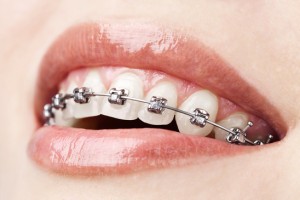
In years past, the path to straighter teeth was littered with clunky brackets and wires. Patients pursuing a perfect smile had to endure a metal mouth for months and even years before they could see the results.
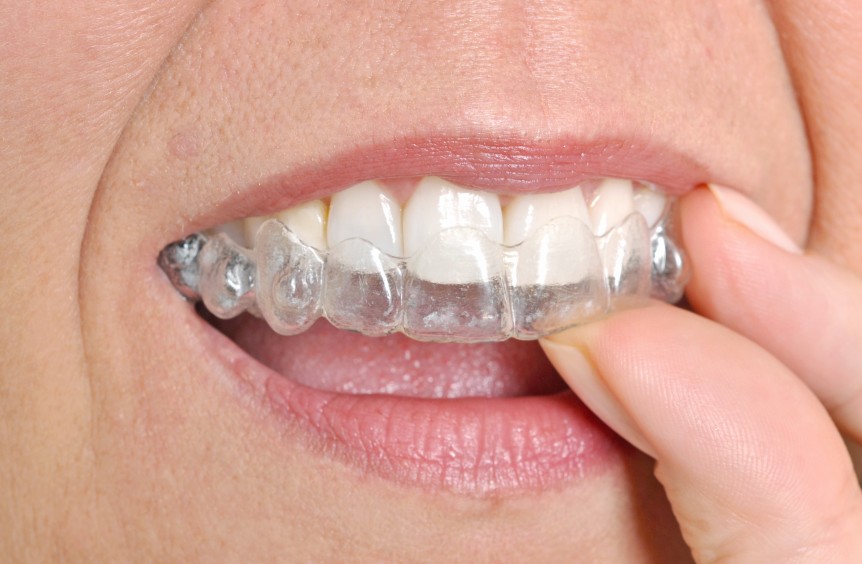
Modern technology has improved upon this process, though. Now, patients can bring their teeth into the proper position with Invisalign, which straightens the teeth using a series of clear plastic trays.
The basic premise of Invisalign is similar to that of conventional dental treatment. The teeth are moved through forces that are directly applied to them. The dentist gathers information at an initial appointment through a visual examination, along with x-rays and impressions. That data is then used in treatment planning.
The trays are designed to move the teeth independently. Patients switch trays approximately every two weeks, and it’s important to use the trays in the sequence recommended by the dentist and wear them between 20 and 22 hours to achieve the best outcomes.
Invisalign allows patients to enjoy the results of their treatment in real time, which is a major attraction for some patients. You see your teeth get straighter as it happens. There’s no need to envision what your teeth really look like underneath those braces.
Beyond its aesthetic advantages, Invisalign offers patients a variety of benefits in terms of oral health. The trays can be removed for brushing and flossing, eliminating the need to fumble with floss threaders to keep teeth clean underneath the wires and brackets.
Patients also take out the trays at mealtime, which means no dietary restrictions during treatment.
Furthermore, Invisalign requires fewer visits to the dentist for adjustments or wire replacements. Because the patient is doing most of the work by switching out the trays, dental appointments are only necessary every six weeks or so, allowing the dentist to monitor your progress.
Recent advances in Invisalign technology have made this treatment an option for patients with malocclusions (“bad bites”) in addition to crooked teeth, too.
If you want to straighten your teeth without sporting a mouth full of metal, the answer is clear. Ask Dr. Taskonak if the Invisalign system will be effective in your case. Contact our office serving Fort Lauderdale and schedule your consultation today![/vc_column_text][/vc_column][/vc_row]
Dental work is not just for adolescents. If you’re an adult and have misaligned teeth, you can have braces or Invisalign to correct the problem. Proper tooth alignment is important to your dental health and can also greatly increase your quality of life, particularly if you are self-conscious about your teeth.
Dentistry is often considered a rite of passage for adolescents. Braces are used after all the permanent teeth have emerged to ensure they are properly aligned. However, many adults also have alignment problems. Sometimes these issues develop with age, while others simply weren’t treated earlier. If you are experiencing wear and tear, symptoms of TMD, or have teeth that are crooked, poorly spaced, or overlap, dentistry can help.
There are options available aside from traditional braces for those who prefer that their braces not be obvious. These include:
These are all popular options for adults who wish to have dental work, especially those who work with the public or whose appearance is important to their job.
There are several reasons why you might choose to have braces as an adult. Misaligned teeth can cause a variety of long-term problems, including:
You also might just feel self-conscious about your teeth if they overlap or have visible gaps between them. Having dental work can increase your self-confidence and thus improve your quality of life.
Invisalign is a popular option for adults because the clear plastic aligner trays are easy to use, comfortable, and practically invisible. You can have your teeth straightened without anyone knowing you’re even wearing the trays. Treatment is very effective, and in most cases takes about the same amount of time as traditional braces.
Call our office today to speak with a member of our caring team and set up a consultation about Invisalign with our Dr. Taskonak.
[vc_row][vc_column][vc_column_text]
Tooth loss can occur due to a variety of reasons, even if you take very good care of your teeth. If you do lose a tooth, it’s important to consider all the options for tooth replacement. This includes dental implants, which are the best possible choice for permanent replacement of missing teeth.
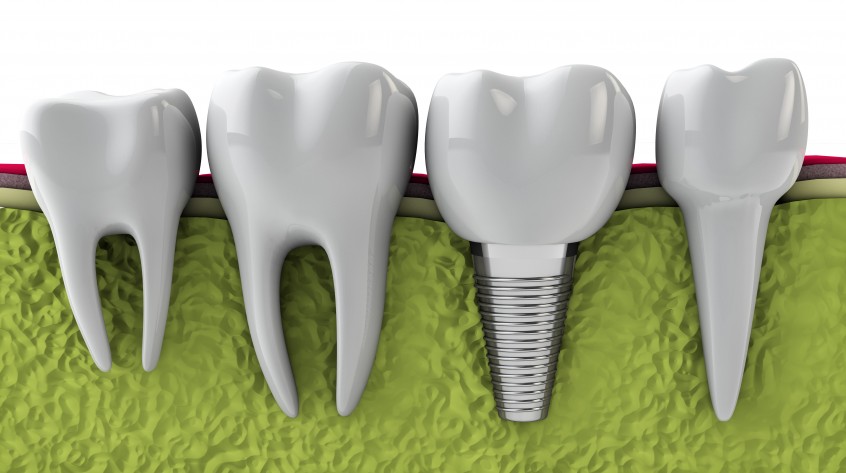
A dental implant is basically an artificial root that’s placed directly into your jawbone. It’s shaped like a screw, and is generally made of titanium or a titanium alloy. The material is important, because the bone must be able to bond with the implant in order for the implant to be successful. Once the implant has healed and is secure, you’ll have either a prosthetic tooth attached to each individual implant or several implants will be used to secure a removal arc of dentures. In either case, the implant helps keep your teeth secure and also stimulates growth in your jawbone to prevent the eventual atrophy that is common among people who have worn dentures for a long period of time. Implants allow you to eat, talk, and chew normally, without having to worry about dentures becoming dislodged or uncomfortable.
Dental implants are the best option for tooth replacement as far as comfort, a realistic look, and jawbone health. However, they aren’t right for everyone. To determine if dental implants are the best choice for you, consult with our periodontist. Some issues that could make it difficult for implants to be successful include:
In order for an implant to heal thoroughly and successfully, you might need to be treated for gum disease or have bone grafts placed before the actual implant procedure. This can increase the likelihood of a successful implant. In some cases, however, particularly if you have a systemic problem like diabetes or an autoimmune disorder, our periodontist might recommend a different option.
Call the office of Dr. Burak Taskonak today to make an appointment with our team.
[/vc_column_text][/vc_column][/vc_row]
Porcelain veneers are a great way to remake your smile without expensive dental work or crowns that require your teeth to be altered. Though lightweight and easy to apply, veneers can give you the beautiful smile you’ve always wanted, transforming chipped, cracked, pitted, discolored, and even slightly misaligned teeth.
If you are considering veneers, you might wonder how much care your veneers might require.
To understand the kind of care veneers require, it is helpful to understand what they are and how they work. Veneers are made of porcelain—a delicate material that mimics the light reflection properties of natural tooth enamel. Although veneers are very thin, once they are bonded to the surface of your teeth, they become strong and durable. The porcelain is color matched to your natural teeth, and because they are semi-translucent, teeth treated with veneers are virtually indistinguishable from those that are not treated.
The strong bond of the veneer to the tooth means that you can perform most everyday activities without worrying about damaging the veneers. However, there are some precautions that will help your veneers last for many years.
Veneers, like your natural teeth, must be brushed daily, and don’t forget to floss teeth that have been treated with veneers. Regular visits to the dentist are also important, both to keep your teeth healthy and to spot any possible problems with the veneers before they become serious.
When you go to the dentist, though, be sure to tell your hygienist that you have veneers. Some tools and cleaning compounds can be abrasive to veneers. Also, be sure to follow any recommendations your cosmetic dentist makes in regards to care. Typically, you should avoid biting hard substances, such as ice, and avoid staining agents that could turn your bright veneers into dingy surfaces just as they would affect your natural teeth.
For information about veneers, what they can do for you, and how to care for them, please contact our office for an appointment or a consultation.
So many of us don’t know that oral health is a very important part of the total body health. When we don’t take care of our teeth and the supporting tissues, it can cause serious health problems throughout our body.
50% of adult have some degree of periodontal disease, which has serious consequences; for example premature, low birth-weight babies (20,000 deaths/year), pancreatic cancer (38,000 deaths/year), coronary artery disease (445,000 deaths per year).
Did you know HPV can cause oral cancer, too? 75% of Americans develop HPV at some point of their lifetime. There are 8000 death per year from oral cancer.
Early detection is the key. Have your dental checkup and hygiene cleaning at least twice a year. If you see any changes, white or red spot anywhere in your mouth, lips, gum tissues, tongue or on your palate, immediately have it checked out by Dr Burak Taskonak.
Please check out the following video and share it with friend and family:
One of the many types of patients coming in seeking dental attention, are those who complain of extreme pain or sensitivity due to their need for a Root Canal.
But what exactly is a Root Canal?
Root Canals are necessary when the tooth is decaying, and there is risk of permanent damage to the tooth’s pulp (or has already damaged it). The infected tooth needs to be treated before the infection spreads to the bloodstream, and before causing severe pain to the patient.
How do I know if I need a root canal?
Dr. Taskonak will evaluate the area and examine you after one of our assistants has taken a dental x-ray to confirm if you need a root canal before recommending any course of treatment. Symptoms vary from case to case, but may include:
How does Dr. Taskonak treat root canals?
During a root canal procedure, you will first be injected with a local anesthetic to prevent discomfort. Your teeth, gums, skin, and sometimes even the tongue in the affected area will be numbed. Nitrous oxide (or “laughing gas”) can also be used for relaxation. Once the anesthesia has a chance to begin working, Dr. Taskonak begins the root canal treatment. Using a dental drill, the pulp of the tooth is removed. A filling, and antibacterial medication, are added to the inside part of the tooth. Often, a crown is needed to cap the tooth to prevent the tooth form breaking.
Many patients approach our office with concerns regarding a tooth that they have previously lost or a tooth that needs to be replaced due to severe damage. When a tooth is missing, a dental implant takes the place of the missing root and a prosthetic crown replaces the natural crown.
A dental implant is a titanium screw that serves as replacement of the root. After 2-3 months of healing an abutment and a permanent crown are placed on that implant, making it look and feel like a real tooth. The length to complete the treatment depends on many factors; one of them is the patient’s level of bone.
If you are interested in a FREE consultation for your implants, give our office a call, we will explain further why an implant serves as the best option to replace a tooth and to prevent others from damaging. Doctor Taskonak, will evaluate your problem area and discuss your case as well as explaining if you are a candidate for dental implants. 
In everyday lifestyle we don’t recognize how much synthetic materials we use and consume. Did our ancestors had tooth decay couple of thousand years ago? Was there any need for a profession called a Dentist? In fact, was cancer a main cause of death back then? Well, there is one story that says natural living is the way to go.
Of all the peoples visited by, Weston Price during his historic research expeditions of the 1930s, none elicited as much awe as the Australian Aborigines, whom he described as “a living museum preserved from the dawn of animal life on the earth”. Dr. Price was a Cleveland dentist known primarily for his theories on the relationship between nutrition, dental health, and physical health. He has been called the “Isaac Newton of Nutrition.” In his search for the causes of dental decay and physical degeneration that he observed in his dental practice, he turned from test tubes and microscopes to unstudied evidence among human beings. Dr. Price sought the factors responsible for fine teeth among the people who had them–isolated non-industrialized people. For Price, the Aborigines represented the paradigm of moral and physical perfection. Their skills in hunting, tracking and food gathering were unsurpassed. Their social organization allowed for the schooling of children from a young age. A series of initiations for the boys were designed to instill both fearlessness and respect for the welfare of the entire tribe, and respect and care for a sizable number of old people, for whom were reserved special foods that were easy to gather and hunt. Price’s photographs of Aborigines on their native diets illustrate dental structures so perfect as to make the reader wonder whether these natives were wearing false teeth. But like all the other primitive groups Price studied, the Aborigines soon succumbed to rampant tooth decay and disease of every type when they adopted the “displacing foods of modern commerce” – white flour and sugar, jams, canned foods and tea. Children born to the next generation developed irregularities of the dental arches with conspicuous facial deformities – patterns that mimicked those seen in white civilizations.
Based on Price’s observation we can ask the question: “Are some of the health related problems we are having, because of the modern lifestyle?”. I believe we can definitely say dental decay and periodontal disease are due to dietary habits we have which constitutes more synthetic food than natural. Moreover, treating those conditions employs materials that also do not agree with our body, however,there is an alternative that is called biological or natural dentistry.
Natural or Biological Dentistry means utilizing the safest, non-metal dental materials, and eliminating metals and other toxic factors from the mouth. Biological or Natural Dentistry Focuses on Whole-Body Wellness that Starts with the Mouth. Holistic (The word itself comes from “wholistic” meaning “the whole”) dentists will educate patients on the importance of overall health and how dentistry can play a role in the overall health.
All dentists to some extent see the importance of the mouth in the overall health of an individual. For instance, studies have concluded a link between gum disease and heart health, diabetes, and pregnancies. Moreover, a dental restorative material, dental amalgam, contains elemental mercury. It releases low levels of mercury vapor that can be inhaled. High levels of mercury vapor exposure are associated with adverse effects in the brain and the kidneys.
However there are materials that agree with our body and are called biological materials or biomaterials. Ceramics are the leading materials within the field of biomaterials. Unlike metals that have low biocompatibility, corrosion in a physiological environment, and mechanical properties very different from those of tissues in our body, ceramics are very biocompatible, corrosion resistant, inert, and has very low thermal and electrical conductivity. Consequently, they become the natural material of choice to restore or replace teeth. In fact, they are even used to replace hip joints.

A Titanium Dental implant and a Zirconia Dental implant.
The key way that biological dentistry can enhance physical health is to address the following areas that compromise the immune system:
In summation, if you have a splinter in your body, get it out. The same holds true if you have a dead organ or toxic metals in your mouth… get them out. If the structure is not proper, you can’t chew properly. Change it so it will work properly…
Contact Fort Lauderdale dentist Dr. Burak Taskonak at EAST BROWARD DENTAL. His expertise in cosmetic dental procedures, including tooth bonding, can give you a smile you can be proud to show off. Simply call our Fort Lauderdale office and make appointment.
Please fill out your information below.
“Dr. Taskonak and his staff gave my family excellent treatment and customer service. We were in and out in no time, which is a great when you have a job and family to balance. Thanks again for making our dental experience an enjoyable one.”
Such a great experience, I am so glad that I chose that clinic. The staff is very nice, welcoming, and knowledgeable. I did a whole month of reconstruction veneers, crowns, and a bridge. Dr Beatrice Gil did an amazing job with her assistant Verena

— Oxana I.
I still have a few appointments to go before I am completed. The best people are Steven and Maria. I suffer from MASSIVE dental anxiety without these 2 people I would NOT have made it threw my appointments. I have gotten my top permanent teeth in and they are beautiful. Working on the bottoms next. I am for the first time in my life, looking forward to my next appointment.
— Dana D.
The employees are very professional they speak to you like a friend instead like a patient. Ted is very knowledgeable and does his profession very well. The studio smells great and is very clean especially their bathrooms. It was a pleasure being there. Oh, Dr Chill was great. So are all the staff.
— Marcos R.
Excellent service and the staff is very professional and mostly they care about you and your smile. My teeth look like originals, and they feel great! No pain. No discomfort. I am truly pleased, and I can smile again and eat anything I crave. Thank you, Florida Smile. Don't hold back, get it done!
— Hermen V.

Welcome to Florida Smile Studio. We are a real "smile studio" complete with all aspects of dental and facial aesthetics to include dental implants, veneers, Invisalign, general dentistry, and facial aesthetics! We also boast a renowned dental Hygiene department led by long time Hygienist Gena! Call NOW for your appointment!

1212 E Broward Boulevard, Suite 200
Fort Lauderdale, FL 33301
*Habla español

© 2024 Florida Smile Studio. All Rights Reserved. | Privacy Policy
*Available on certain procedures. Please call for more information
Website Design and Marketing by IWD Marketing